
Cosmetic Practice Marketing Starts With Patient Trust
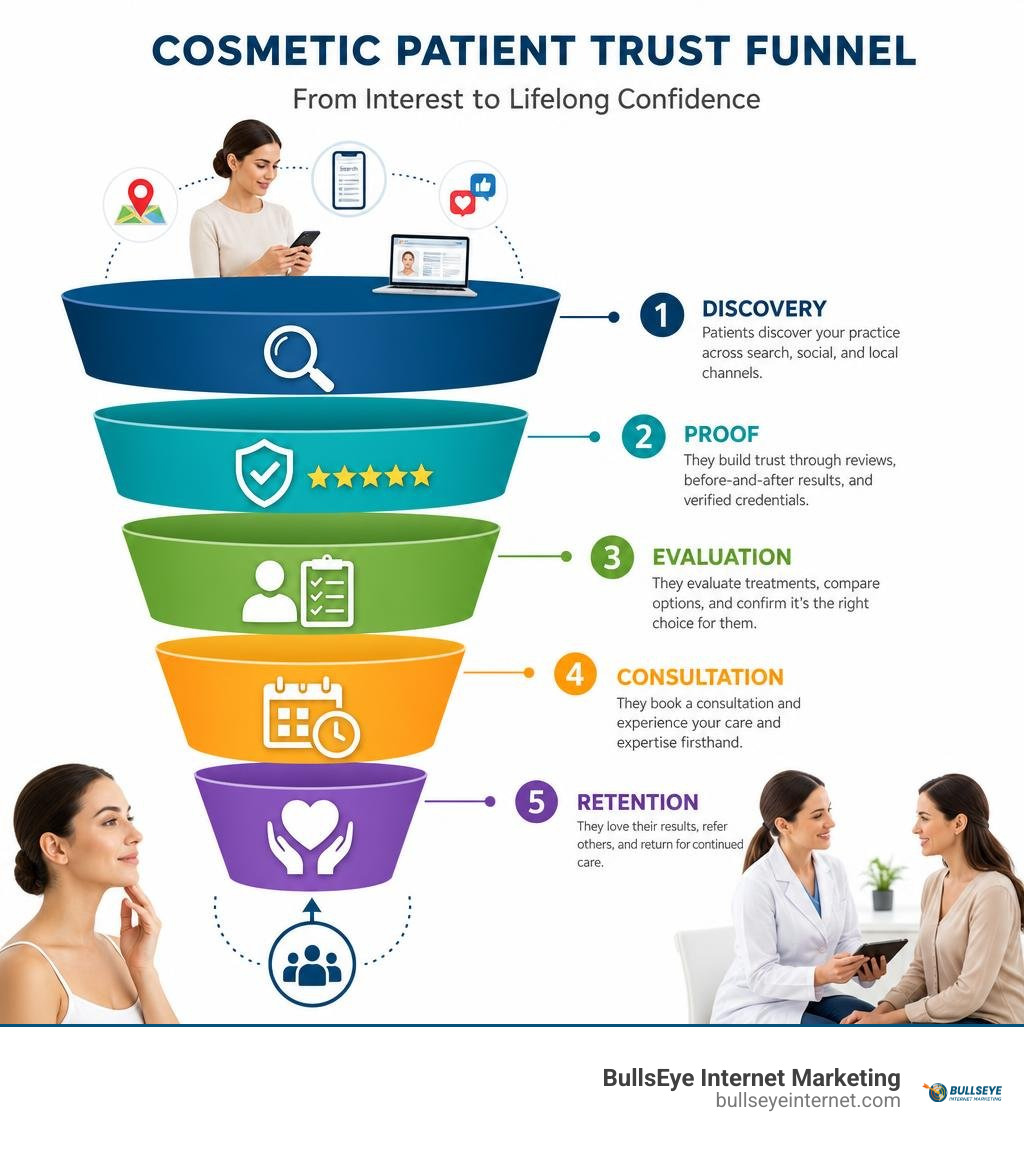
Effective cosmetic practice marketing turns interest into booked consultations by building trust before asking for the appointment. Focus on four essentials:
- Show verified practitioner credentials, safety standards, and clear treatment information.
- Use consented, compliant proof such as reviews, case context, and before-and-after galleries.
- Make it easy to find your practice locally through Google Business Profile, local SEO, and high-intent search ads.
- Follow up consistently across email, SMS, and phone because elective patients often research for weeks before they commit.
Cosmetic patients are not usually acting on pain or urgency. They are weighing appearance, safety, cost, recovery time, and whether they can trust your team with a highly personal result. That makes a clinic website, reviews, social content, and consultation process part of the same decision system.
Many prospective patients interact with 8 to 12 touchpoints before booking, compared with only a few for urgent care. In a market where 84% of patients check online reviews before selecting a provider, visibility alone is not enough. Your marketing must make clinical credibility and realistic expectations easy to verify.
I am Ronnie Katz, founder and Principal CEO of BullsEye Internet Marketing, with more than 20 years of experience helping businesses improve online visibility, traffic, and conversions. In cosmetic practice marketing, I focus on measurable systems that connect local search, paid traffic, conversion-focused websites, and reputation management to create more qualified patient opportunities.
Basic cosmetic practice marketing terms:
Core Pillars of High-Performing Cosmetic Practice Marketing

Aesthetic medicine sits at the intersection of healthcare, personal identity, and luxury hospitality. If a patient experiences sudden tooth pain or a sprained ankle, they choose the closest available clinic that accepts their insurance. In contrast, elective aesthetic treatments require personal financial investment, vulnerability, and a significant threshold of confidence in the provider.
Marketing a cosmetic practice requires positioning that emphasizes clinical excellence rather than transactional discounting. When clinics compete solely on price, they undermine perceived quality and attract clients who switch providers over small price differences. Elite clinics build high-margin practices by pairing advanced medical expertise with a seamless patient experience.
| Attribute | Emergency / General Healthcare | Elective Cosmetic Procedures |
|---|---|---|
| Primary Motivation | Pain relief, acute health necessity | Aspiration, self-image, confidence |
| Decision Window | 24 to 48 hours | 2 to 12+ weeks |
| Average Patient Touchpoints | 2 to 3 interactions | 8 to 12 interactions |
| Payment Model | Insurance-driven / fixed copays | Out-of-pocket / self-pay / financing |
| Evaluation Criteria | Proximity, in-network status | Practitioner credentials, verified results, reviews |
Why Cosmetic Practice Marketing Differs from General Healthcare
General healthcare is problem-driven and reactionary, while aesthetic medicine is elective and aspiration-driven. Someone looking for a surgeon or injector is shopping for an outcome that impacts how they feel every time they look in the mirror.
Because the financial stakes are higher—with treatment plans often ranging from hundreds to tens of thousands of dollars—patients do not convert on their first visit to your website. They research across multiple channels, review galleries, read third-party feedback, and compare provider credentials over a 2 to 12-week window.
Achieving long-term growth requires The Ultimate Blueprint for New Patient Marketing Success, guiding patients through an extended consideration phase where clinical trust always takes precedence over aggressive sales pitches.
The 5-Stage Considered Patient Journey
To convert high-intent prospective patients, your digital presence must address every phase of their decision-making process:
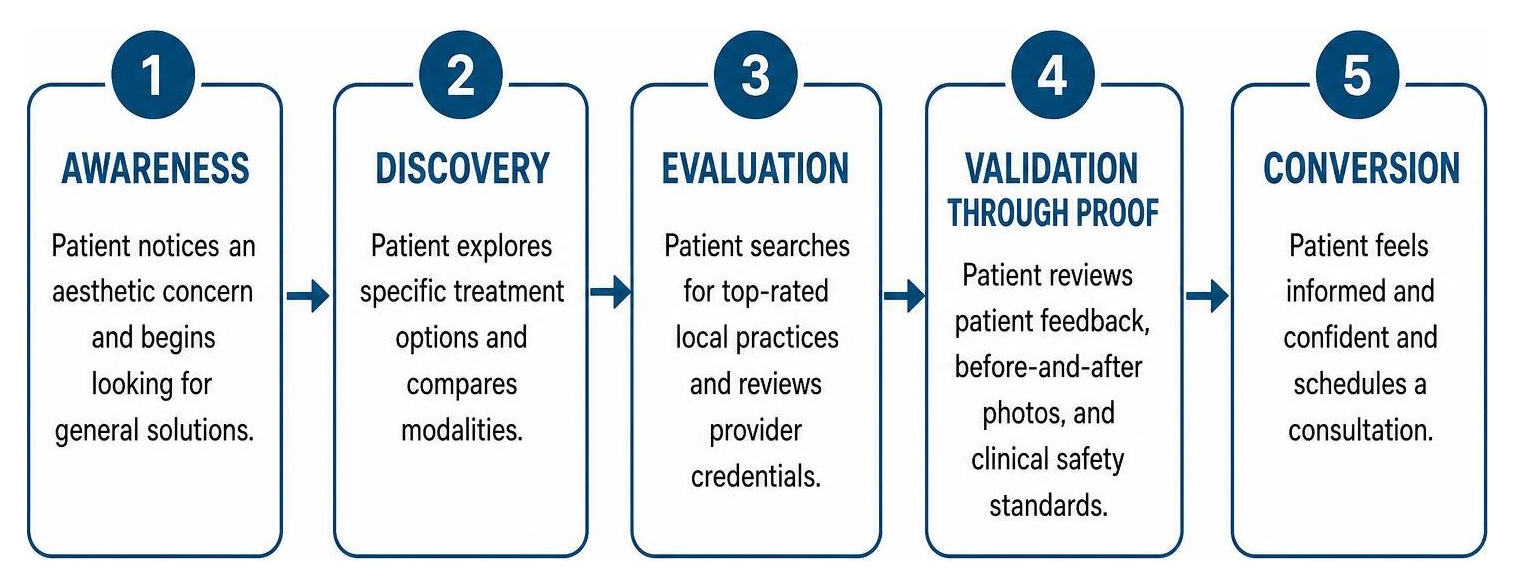
- Problem Awareness: The patient notices an aesthetic concern (such as skin laxity, volume loss, or stubborn body fat) and begins looking for general solutions.
- Educational Discovery: They explore specific treatment modalities (comparing neurotoxins, radiofrequency microneedling, or surgical interventions).
- Provider Evaluation: The patient searches for top-rated local practices, inspecting practitioner credentials and verifying medical oversight.
- Validation Through Proof: They scrutinize patient reviews, before-and-after photo galleries, and clinical safety standards.
- Consultation Conversion: Feeling informed and confident, the patient schedules an in-person or virtual consultation.
A well-structured Aesthetic Clinic Marketing engine ensures your practice appears at every step of this journey with relevant, authoritative content.
The Trust Stack Framework: Clinical Authority Before Paid Traffic

Running digital ads without establishing an underlying layer of clinical credibility is one of the most common reasons aesthetic marketing campaigns underperform. Google categorizes elective medical procedures under strict “Your Money or Your Life” (YMYL) content standards. Both search algorithms and discerning patients expect strong proof of Experience, Expertise, Authoritativeness, and Trustworthiness (E-E-A-T).
The Trust Stack Framework ensures that when a prospective patient clicks on an advertisement or organic search result, every digital touchpoint reinforces your clinical authority and eliminates doubts.
The Practitioner Entity Method and Medical Authority
Patients choose practitioners, not abstract business entities. The Practitioner Entity Method focuses on establishing the individual credentials and clinical identity of your lead physicians, surgeons, and advanced practice injectors.
Every lead clinician should have a dedicated profile page detailing board certifications, specialized medical training, hospital affiliations, and active memberships in professional bodies. Integrating structured Physician and MedicalProcedure schema markup into your website code helps search engines connect your clinicians directly to medical registries and verified third-party citations.
When searching for guidance on selecting specialized partners, practices often consult The Ultimate Guide to Choosing Dermatology Advertising Experts to ensure their clinical authority is properly communicated across all search platforms.
Compliant Visual Proof and Before-and-After Galleries
Before-and-after photos are among the most influential assets for converting prospective patients, but they also require strict regulatory and ethical diligence:
- Documented Written Consent: Secure explicit, signed patient releases for all marketing photography across websites, print, and social media.
- Standardized Photography Protocols: Capture images using identical focal lengths, angles, background settings, and clinical lighting to preserve authenticity.
- Unretouched Transparency: Avoid digital filters, skin-smoothing software, or misleading post-production adjustments.
- Contextual Disclaimers: Include clear notes explaining that individual results vary based on anatomy and lifestyle, while detailing the exact treatment plan and timeline shown.
For further insights into professional clinical standards, explore advanced training resources such as Cosmetic Procedure Training in Fort Lauderdale, FL | Laser & Body … and Cosmetic Procedure Training in Miami & Miami Beach, FL | Laser & Body ….
High-Impact Acquisition Channels for Aesthetic Practices in 2026
Modern cosmetic practices rely on a balanced channel mix that captures existing high-intent search volume while building local brand awareness. Relying on a single platform creates vulnerability to algorithm updates or rising ad costs.
You can evaluate how targeted advertising expands local reach through Local Ads for Dermatologists: How to Attract More Patients.
Local SEO and Google Business Profile Optimization
Local search is the primary driver of patient inquiries for aesthetic clinics. With 76% of “near me” mobile searches resulting in an in-person visit within 24 hours, maintaining top visibility in the Google Local 3-Pack is vital.
Optimizing your Google Business Profile (GBP) involves more than entering basic contact details:
- Category Selection: Select your primary category carefully (e.g., Medical Spa, Plastic Surgeon, or Dermatologist) and configure secondary categories to reflect specific procedural offerings.
- Visual Engagement: Profiles that regularly publish high-quality clinic and team photography generate 35% more website clicks and 42% more direction requests than sparse listings.
- Semantic Review Architecture: Encourage satisfied patients to mention specific procedures and outcomes in their reviews. Google indexes these authentic terms, boosting your ranking for procedural search queries.
- Google Local Services Ads: Integrate Google Local Services Ads for Dermatologists to secure prominent, trust-verified placements above standard search ads.
Paid Ad Strategies in Cosmetic Practice Marketing
Paid advertising delivers predictable patient acquisition when paired with strong conversion infrastructure:
- Google Search Ads: Capture high-intent searches from patients actively seeking treatments (e.g., “dermal filler specialist near me” or “revision rhinoplasty surgeon”). Maintain an active negative keyword list to prevent wasted spend on terms like “cheap,” “at-home,” or “certification classes.”
- Meta Ads (Instagram & Facebook): Use visual short-form video and educational explainers to introduce procedures, demystify recovery timelines, and highlight practitioner expertise.
- Speed-to-Lead Workflows: A paid lead contacted within five minutes is significantly more likely to book a consultation than one contacted after an hour. Automated SMS follow-ups capture patient interest while intent is highest.
Clinics scaling their case volume often implement specialized systems for Cosmetic Surgery Lead Generation to keep consultation schedules filled with qualified inquiries.
Conversion Architecture: Turning Clinic Traffic into Booked Consultations
A high-traffic website generates revenue only if visitors take action. Because more than 70% of aesthetic website traffic originates on mobile devices, your conversion architecture must provide an intuitive, responsive user experience.
Practices utilizing Cosmetic Dermatology Marketing prioritize frictionless mobile navigation, clear calls-to-action, and secure digital consultation scheduling.
High-Converting Treatment Page Framework
Every procedure page on your website should serve as a comprehensive educational and conversion resource. Include the following elements:
- Clear definitions of the treatment and its primary aesthetic benefits.
- Candidacy criteria explaining who is an ideal candidate—and who is not.
- Transparent recovery expectations, procedural discomfort levels, and healing timelines.
- Interactive before-and-after image carousels specific to that procedure.
- Prominently placed, sticky booking buttons and direct click-to-call options.
- Brief provider biographies highlighting clinical experience and safety protocols.
- HIPAA-conscious intake forms that protect patient data.
Handling Price Inquiries and Overcoming Objection Friction
Price obscurity is a major point of friction for elective medical patients. When websites hide pricing entirely, visitors often assume the worst or move on to a competitor.
While medical treatments require custom anatomical plans, offering transparent starting price ranges or interactive treatment calculators sets realistic expectations and filters unqualified inquiries. You can also implement nominal, refundable consultation deposits to reduce appointment no-shows, along with third-party financing options to make comprehensive care plans more accessible.
Automated Retention Systems and Practice Growth Metrics
Acquiring a new patient can cost 5 to 25 times more than retaining an existing one. Furthermore, research shows that increasing patient retention by just 5% can boost overall practice profitability by 25% to 95%.
Sustainable clinic growth relies on maximizing patient lifetime value through automated follow-up workflows, regular treatment maintenance, and structured loyalty programs. Clinics focused on long-term value often leverage strategies similar to those found in Marketing Your Hair Transplant Clinic for Success to keep patients engaged throughout multi-year treatment journeys.
Lifecycle Recall and Re-Engagement Automations
Aesthetic treatments follow natural biological lifecycles. Automating your communication around these intervals ensures consistent rebooking:
- Neurotoxin Maintenance: Automated SMS and email check-ins sent at 12 to 14 weeks post-treatment to schedule maintenance.
- Dermal Fillers: Personalized recall reminders sent at 6 to 9 months to assess volume retention.
- Skin Rejuvenation & Chemical Peels: Follow-up appointment suggestions delivered every 4 to 6 weeks for recurring skin health plans.
- Post-Care Nurturing: Automated check-ins sent at 24 hours, 7 days, and 30 days post-procedure to monitor healing and request reviews.
Email marketing remains exceptionally cost-effective, generating an average return of $36 for every $1 invested when used to deliver personalized care reminders and VIP member updates.
Essential KPIs Beyond Vanity Metrics
Tracking website traffic and social media likes is not enough to measure true practice growth. Focus on these core financial and operational metrics:
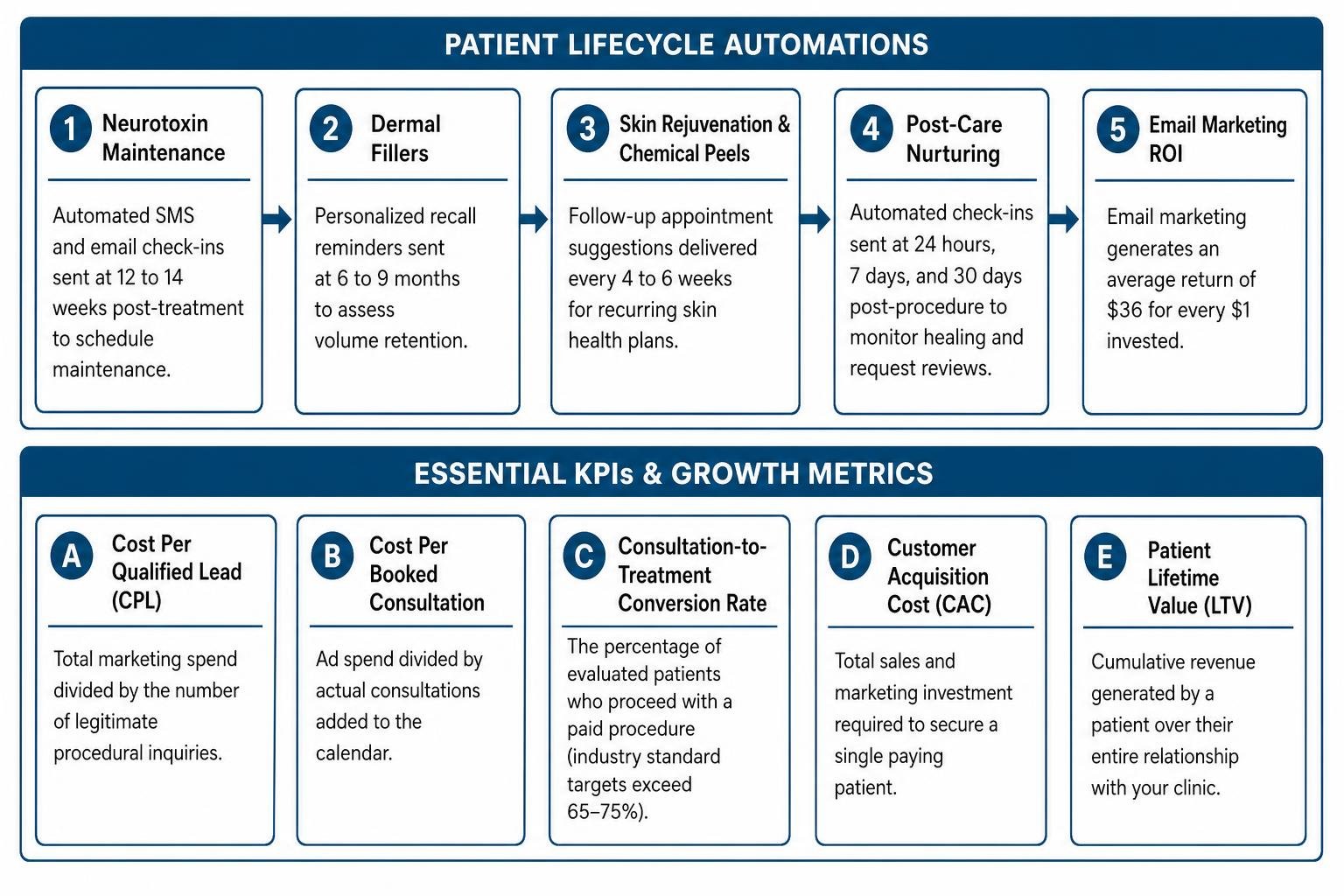
- Cost Per Qualified Lead (CPL): Total marketing spend divided by the number of legitimate procedural inquiries.
- Cost Per Booked Consultation: Ad spend divided by actual consultations added to the calendar.
- Consultation-to-Treatment Conversion Rate: The percentage of evaluated patients who proceed with a paid procedure (industry standard targets exceed 65–75%).
- Customer Acquisition Cost (CAC): Total sales and marketing investment required to secure a single paying patient.
- Patient Lifetime Value (LTV): Cumulative revenue generated by a patient over their entire relationship with your clinic.
- Return on Ad Spend (ROAS): Direct revenue generated from paid campaigns divided by total ad spend.
Frequently Asked Questions About Aesthetic Practice Growth
How is marketing a cosmetic clinic different from marketing a general medical practice?
Cosmetic marketing focuses on elective, self-funded treatments driven by personal aspirations rather than acute medical necessity. Patients spend weeks researching options across 8 to 12 digital touchpoints, requiring practices to build deep clinical trust, showcase verified before-and-after results, and provide transparent treatment education.
Which digital marketing channels deliver the highest ROI for cosmetic practices?
Local SEO and Google Business Profile optimization consistently yield the highest organic return by capturing local search intent. High-intent Google Search ads capture ready-to-book patients, while compliant Meta video campaigns build brand discovery. Automated email and SMS retention workflows deliver high profitability by driving repeat bookings at low cost.
How can cosmetic practices use before-and-after photos compliantly?
Clinics must secure written patient consent forms specifically authorizing promotional use. Photos should be captured under standardized lighting and angles without digital filters or deceptive retouching. Every image must include contextual disclaimers stating that individual results vary, alongside details about the specific procedures performed.
Conclusion
Building a thriving aesthetic clinic requires more than superficial social media posts or discounted treatment offers. True growth comes from creating an integrated marketing system that demonstrates clinical authority, captures high-intent local searches, and nurtures patient relationships over time.
At BullsEye Internet Marketing, we help cosmetic practices establish predictable patient acquisition systems through SEO, Google Business Profile optimization, targeted PPC, and conversion rate optimization. We offer no long-term contracts and work with only one client per industry per geographic area, giving your practice an exclusive competitive edge.
Ready to expand your practice? Discover our specialized approach to Advertising for Plastic Surgeons and start building a predictable patient pipeline today.
